
The rapid advancement of emerging technologies is transforming how brands engage with their audiences, enabling richer interactions, more immersive experiences, and deeper connections. This shift is fueled by the exponential growth of computing power, along with advances in software, data, and intelligent systems. Together, these forces are reshaping the landscape of branding and design.
In this article, we explore 5 key innovations that are redefining how consumers discover, engage with, and experience brands in their everyday lives. Together, these innovations signal a fundamental shift in how brands must think, design, and operate in an increasingly dynamic digital landscape.
1.) Personalization
The Future of Branding is Personal
The future of branding is becoming more and more personal. Personalization is a data-driven approach to branding, advertising, and experience. It refers to brands tailoring the messaging, product, or experience based on the individual needs, behaviors and preferences of each consumer.
The age of mass advertising with one-size-fits-all messages is slowly dying. In the future of branding, brands will have to explore more creative ways to custom tailor their experience, campaigns, software, and products to stay relevant to each individual.
Personalization vs Mass-Customization
However, personalization is not to be confused with mass-customization, although they are quite similar. The former is more focused on tailoring content and experiences to create more unique and relevant interactions while the latter is more focused on giving customers the option to tailor their products to their specific needs and preferences before purchasing. Some examples are NikeID and Printful.
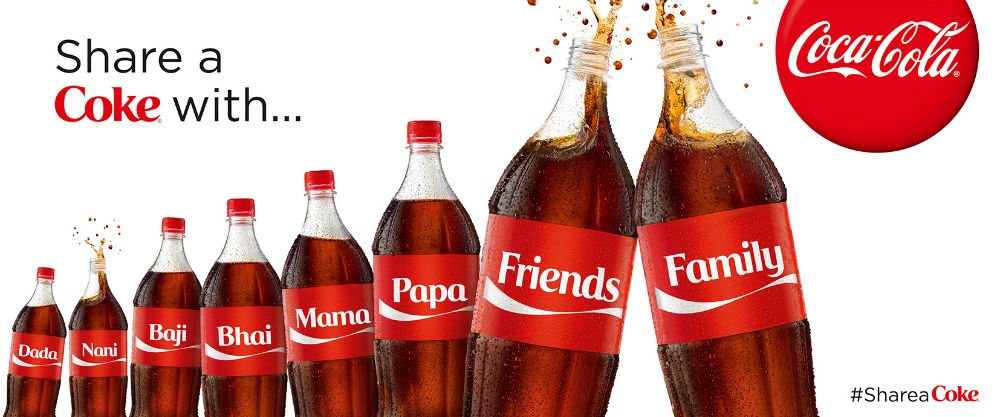
However, some brands are coming up with creative ways to leverage both tactics effectively. One example is the “Share A Coke” campaign by Coca Cola which was very successful in connecting with people on a personal level by allowing them to purchase bottles with individual names rather than the traditional Coke label. These names were not based on personal names that were provided. Instead they were based on popular names and nicknames that were chosen by the brand. This allowed them to add a touch of personalization and create a sense of customization without having to collect names and produce custom labels for each specific customer.
The Internet of Things (IoT)
Products Are Becoming Smarter
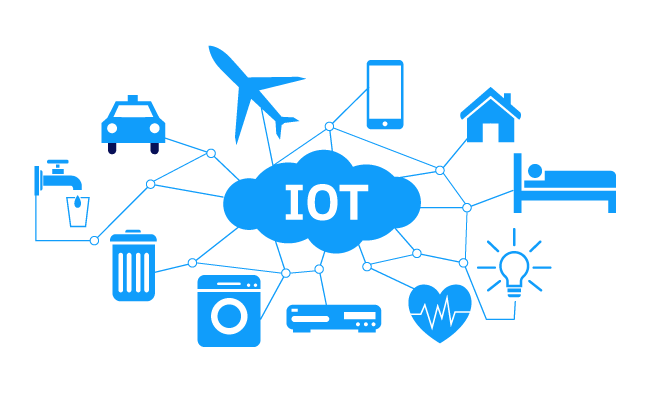
The way we interact with technology, and with everyday products, is rapidly evolving with the global adoption of IoT technologies.
What is often described as the second wave of the internet, popularized by Steve Case, was defined by the rise of search engines, social media platforms, and e-commerce. In what Case refers to as the third wave, the internet moves beyond screens and platforms to become deeply integrated into everyday products, environments, and systems. One central expression of this shift is the Internet of Things, which embeds connectivity and intelligence directly into the physical world.
IoT enables richer and faster connectivity by allowing everyday objects and systems to collect, share, and respond to data in real time. Today, a majority of large enterprises report using IoT technologies in at least one core function, signaling a shift towards mainstream adoption. Industry analysts also estimate that the number of active IoT devices worldwide has more than doubled over the past decade and is expected to exceed 25-30 billion connected devices globally by the end of the decade, spanning consumer, enterprise, and government use cases.
As IoT increasingly converges with artificial intelligence (AI) and machine learning, connected products are becoming capable of learning user behavior and improving over time. By embedding chips and sensors into physical products and systems, brands can gain real-time insights into how users interact with their offerings. This data can then be used to further optimize performance, personalize experiences, and extend product value over time. Connected products can also communicate with one another and transmit data into the broader IoT platform, forming intelligent systems rather than isolated devices.
As IoT accelerates, it raises important questions around data privacy, ownership, and security. These challenges underscore the need for stronger regulatory frameworks, improved security standards, and greater public awareness to ensure the responsible and ethical development of IoT technologies.
3.) Voice Technology
Image source: technofaq.org
The Widespread Adoption of Voice
Another growing shift in how consumers interact with brands is the rise of voice-based search and assistance. Early predictions suggested that half of searches will be happening through voice by 2020. Although this prediction was not fully accurate, we do know that voice search has grown significantly, especially among younger consumers who are slowly transitioning from traditional texting and typing to voice in order to search for a product, service, or brand. According to yaguara.co, 58% of consumers reported using voice to search for a local business. Also, according to Statista, 75% of households are expected to own a smart speaker by 2025.
As more and more searches are happening through voice, brands will have to adapt their messaging to emerging voice technologies that will also become more mainstream in the near future.
4.) New Design Realities
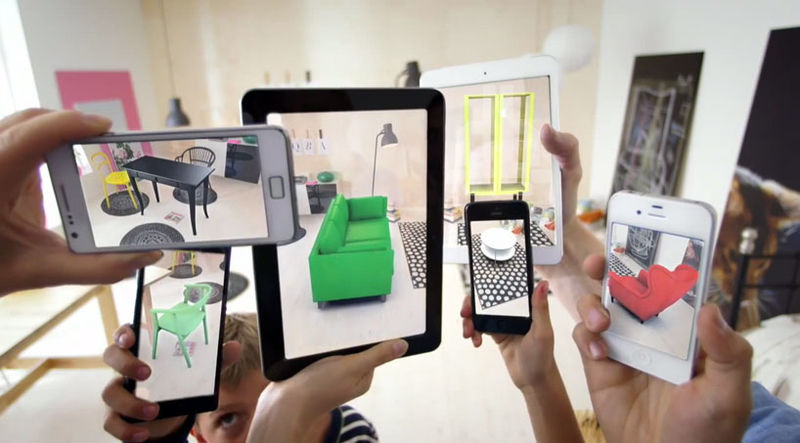
Blending The Virtual Experience with The Physical Environment
The widespread adoption of Virtual Reality and AR will also revolutionize how we shop and interact with brands, especially in the world of retail and ecommerce which is growing rapidly.
New design realities are gradually becoming a part of our everyday lives and bridging the gap between the virtual experience and physical environment. Imagine being able to experience how a product will look in your room before purchasing it online or trying on a product using augmented reality or a 3D model of yourself.
One example is IKEA which has been experimenting with augmented reality since 2013. The retail giant recently expanded into the world of virtual reality with their new HTC Vive Application that allows people to experience the retail shopping environment through virtual experience. Shopify, the ecommerce giant, has also been experimenting with possibilities of 3d models of products online that can be rotated or previewed in your living room using augmented reality.
5.) Generative Design
What is Generative Design?
This is an emerging approach to branding, design, and experience that uses rule-based systems and creative algorithms to generate dynamic visual expressions.
Rather than just designing single, fixed brand assets, designers can define a set of parameters, constraints, and inputs that allow designs and experiences to evolve across a wide range of expressions, from identity systems and motion graphics, to interactive installations.
Generative design should not be confused with the use of generative AI. While generative AI is more of a tool that produces outputs based on prompts and existing information, Generative design functions as a design philosophy and system. It emphasizes internal structure, logic, and adaptability.
Generative design systems produce identities that are more scalable, dynamic, and responsive, whereas generative AI typically generates static logos or assets derived from designs already present on the internet.
Because generative design operates as a system rather than a one-off solution, it allows for deeper creative exploration. Brands can behave more like living organisms that can adapt to users, environments and contexts over time, wile maintaining a cohesive visual language. This approach enables designers to create more robust visual identities with multiple iterations, all grounded in consistent rules and data-driven logic. Generative design opens the doors to richer, more immersive forms of brand expression that evolve alongside both technology and user behavior.
Examples of Generative Design
One well-known example of generative design in branding is the Squarespace visual identity developed by DIA, a branding agency in NYC that specializes in Kinetic identities. It was developed using a generative framework inspired by the heritage of New York City. You can click here to learn more.
Another example is the identity design for Brute, the wine estate brand, which uses real-time particle simulations based on weather conditions in the vineyard. You can click this link to view the case study. The system translates environmental data into evolving visual forms, making the brand identity responsive to its physical context. It was developed by generative designer Patrik Hübner who also developed an interactive branding system for Schwanensee using motion capture data to drive visual expression. You can click this link to take a look at the case study on Behance
How Else Do Brands Leverage Data?
In the world of media architecture, brands are also leveraging data to influence the design, functionality, and interactivity of media installations and structures. Through data-driven media architecture, brands can create more engaging and memorable experiences that enhance the physical environment. Although media architecture is not classified as a form of generative design, it still incorporates some of the same elements of generative design, such as the use of algorithms to create interactive and dynamic experiences.
“We transform media from one medium into another one and in the process tell new stories and find new interesting things hidden within. So Big Data can become a sculpture, or maybe music or sound could create architecture..”
~ Patrik Hübner
In Conclusion, The future of branding is more personal, data-driven, dynamic, and interactive. Consumers are constantly adapting to new technologies and brands are trying to explore more creative ways to leverage these new innovations to create more meaningful experiences, products and interactions. Think about what key trends can you leverage in your business to give your brand a greater competitive advantage. If you enjoyed this article you might also like to learn more about the 6th trend that is shaping the future of branding which is the change to subscriptions.
Don't Forget to Share or Subscribe!
Get Your Free Download! Delivered to Your Inbox.
5 Branding Mistakes to Avoid
Learn about the 5 Branding mistakes that business owners can avoid.





One Response